LEP
Landlord Engagement Program
PIC’s LEP provides a much-needed linkage between landlords and property managers with vacant units, and households currently experiencing Chronic Homelessness and homeless Veterans eligible for HUD VASH.
About The Landlord Engagement Program



-
LEP partners with landlords who are willing to relax their standard screening criteria on applications received for participating households. LEP helps to ensure that complaints and concerns are promptly addressed. In some cases, LEP can provide a limited amount of assistance when a client damages a unit.
-
LEP collaborates with partnering service agencies to provide intensive housing navigation services to clients with substantial barriers to identifying appropriate housing.
-
LEP facilitates communication between clients, partnering landlords, and case management providers. In some cases, LEP can provide support with eviction prevention for previously enrolled client households who demonstrate financial need.
Searching for an Apartment?
NEED TO CONTACT THE LEP TEAM?
LEP Office Phone: 808-380-9354
Agency Housing Request
This form is for agencies requesting LEP support for housing.

The Partners In Care - Landlord Engagement Program (LEP) is contracted by the City & County of Honolulu to assist in linking households experiencing homelessness or at risk of homelessness to landlords willing to rent to them. The program began in 2019, and by the close of FY-2023 (October 31, 2024), it has assisted in housing more than 850 households, comprising more than 2,000 individuals.
Landlord & Tenant Support Request
This form is for former program participants and/or their landlords in need of support.
Landlord engagement program
o’AHU HOUSING NOW (ohn)
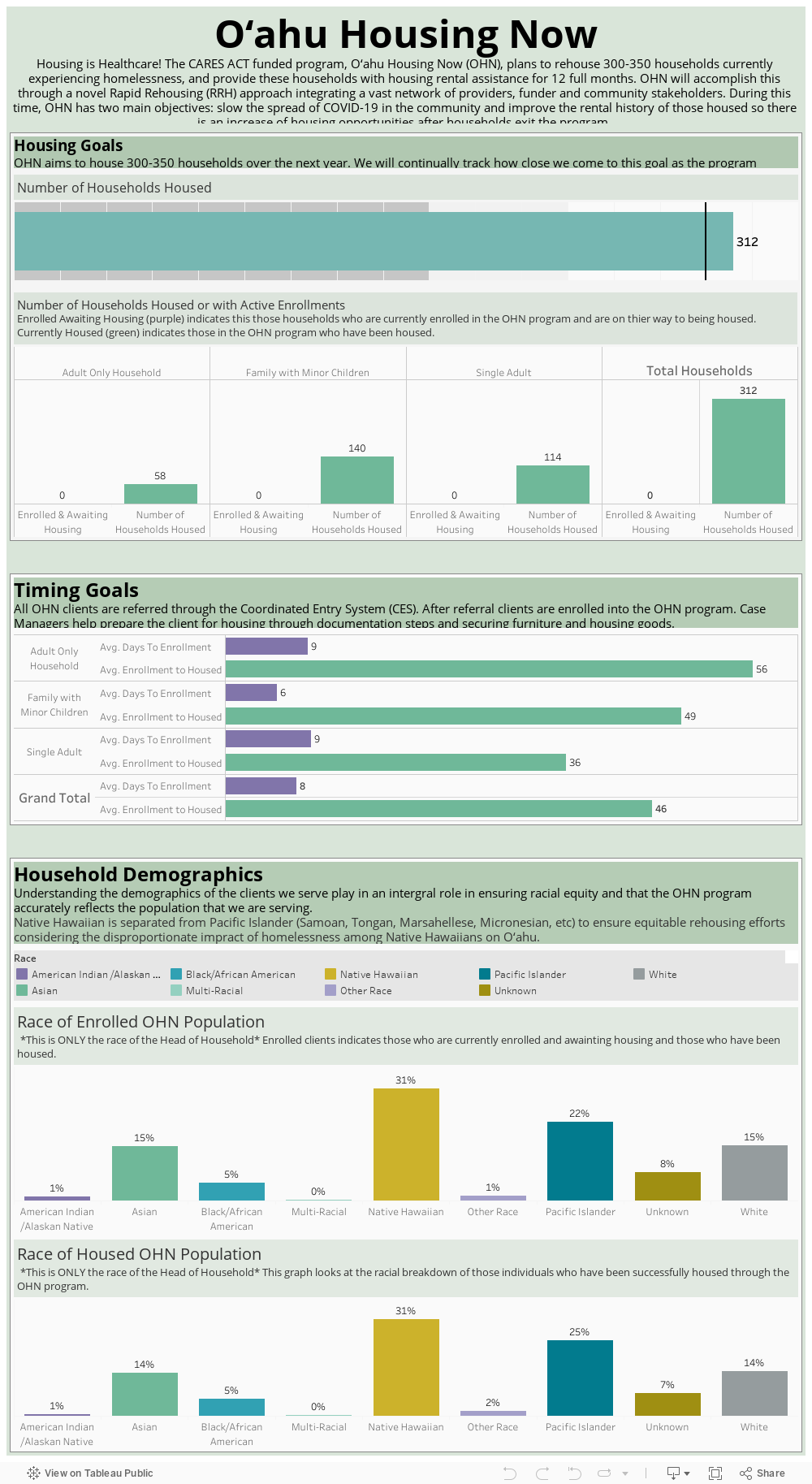
Utilizing the CARES Act funding, the O‘ahu Housing Now (OHN) program was set to target to rehouse a minimum of 300 households who were experiencing homelessness during the COVID-19 pandemic. OHN accomplished this through a Rapid Rehousing (RRH) approach, which provided short-term rental assistance and supportive services to assist people in obtaining housing quickly, increasing self-sufficiency, and maintain housing.
-
City & County of Honolulu: providing the funding for the OHN program
Partners in Care (PIC): lead agency providing capacity building support and technical assistance to the service providers and unit acquisition through the Landlord Engagement Program (LEP).
Housing Solutions Inc. (HSI): leads the rental payment side of the operation.
Family Promise Hawai’i (FPH) & Alternative Structures International (ASI): provides the supportive services to all households being served in our streets and prevent homelessness for those most at risk
-
Address the public health crisis of COVID-19 in the community by achieving social distancing through permanent housing.
Improve the rental history of those housed, to increase housing opportunities after households exit the program.
-
Households were assessed and referred through the Coordinated Entry System (CES).
Prioritization for this project was aligned with CES’s RRH medium-term matching criteria of individuals with a VI-SPDAT score of 4-10, and families with a VI-SPDAT score of 4-8. The households being served were experiencing literal homelessness.
Households worked alongside a case manager to achieve stable and safe housing.
MARCH 1, 2021 - JUNE 30, 2023
EMERGENCY HOUSING VOUCHER PROGRAM (ehv)
STATE \\ SEPTMEBER 1, 2021 - JANUARY 31, 2023
CITY \\ MAY 1, 2022 - JANUARY 31, 2024
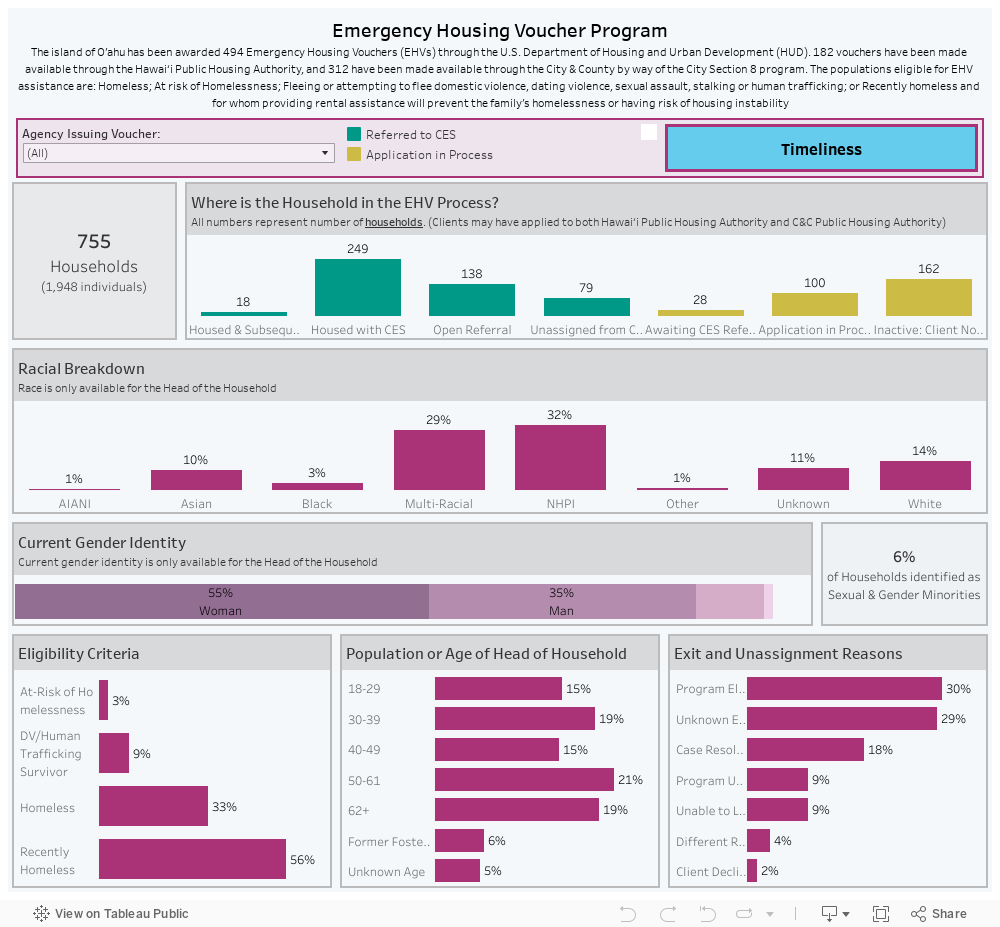
In 2021 the island of O’ahu was awarded 494 Emergency Housing Vouchers (EHVs) through the U.S. Department of Housing and Urban Development (HUD). 182 vouchers were made available through the Hawaii Public Housing Authority (HPHA), and 312 vouchers were made available through the City & County (C&C) by way of the City Section 8 program. The populations that were eligible for EHV assistance were - Homeless; At risk of Homelessness; Fleeing or attempting to flee domestic violence, dating violence, sexual assault, stalking or human trafficking; or Recently homeless and for whom providing rental assistance will prevent the family’s homelessness or having risk of housing instability.